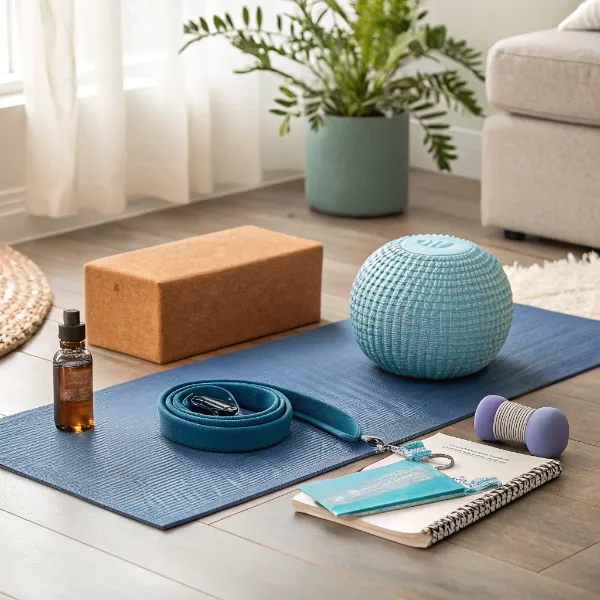


In our fast-paced, digital world, our homes have become sanctuaries, offering refuge from the outside world. However, many modern living rooms are filled with synthetic materials and artificial lighting, which can increase stress levels. Enter biophilic design, a growing interior design trend that acknowledges our innate human connection to nature.
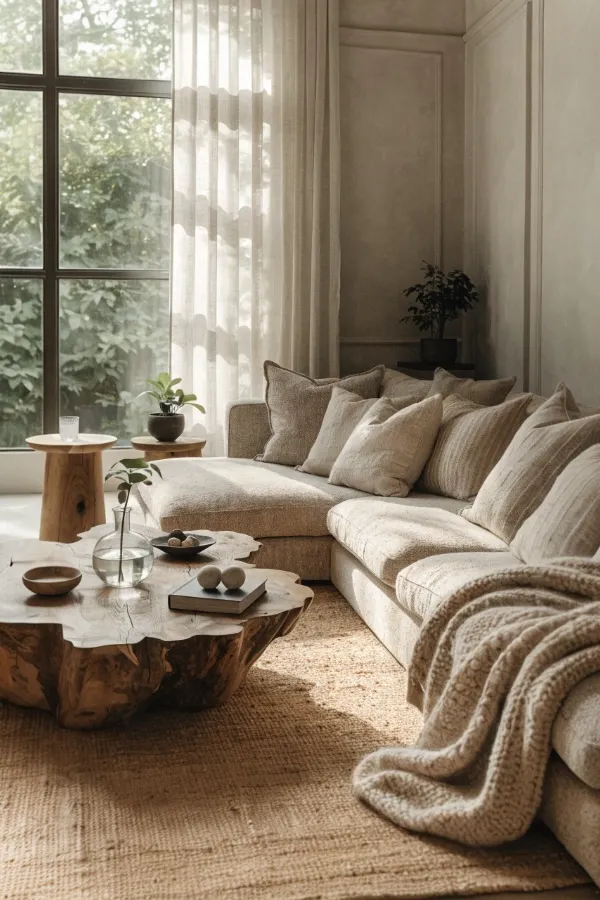
Integrating natural elements into your living space does more than just decorate; it creates a “healing environment” that lowers cortisol levels and boosts creativity. Read on for five essential biophilic design rules to transform your living room into a stress-free oasis.
5 Essential Biophilic Design Rules for Your Home
1. Maximize Natural Light (The Circadian Rhythm Rule):
Light is the most critical element of biophilic design. Our bodies rely on natural light to regulate our circadian rhythm, which affects our sleep patterns and mood. A dark, gloomy living room can lead to lethargy and sadness.
To apply this rule, replace heavy, dark curtains with sheer linen or cotton fabrics that allow sunlight to filter through while maintaining privacy. Place seating, such as a cozy reading chair, near a window to encourage “sky-gazing.”
Product Recommendation: For beautiful natural light and privacy, I highly recommend these sheer linen curtains. They are a game-changer for creating a bright and airy atmosphere.
2. Incorporate organic shapes and fractal patterns.
Nature rarely uses perfectly straight lines or sharp 90-degree angles. Instead, nature is filled with curves, soft edges, and repetitive patterns known as fractals. Think of the veins in a leaf or the petals of a flower.
Replace your sharp-edged furniture with round coffee tables, curved sofas, and circular rugs. When choosing wall art, look for botanical prints or abstract designs that mimic natural textures, such as stone or wood grain. These soft shapes are visually soothing and help reduce the “visual noise” that causes mental fatigue.
3. Bring in the “Greenery” (The Air Quality Rule)
The most obvious way to practice biophilic design is by incorporating indoor plants. However, it’s not just about aesthetics; plants also act as natural air purifiers. Species such as the snake plant, peace lily, and fiddle leaf fig are excellent at removing toxins from the air and increasing oxygen levels.
Instead of placing one plant in a corner, create a “green focal point.” Use different heights by combining floor plants with hanging planters. Studies have shown that the sight of vibrant green foliage lowers heart rates and improves focus.
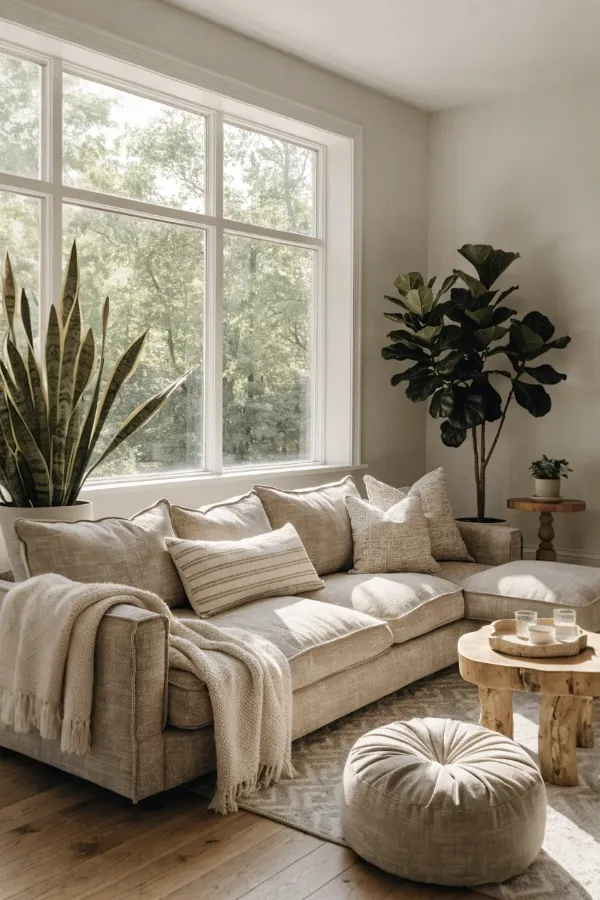
My top pick: If you want to keep your indoor plants healthy with minimal effort, these self-watering planters are a lifesaver for busy plant lovers.
4. Use authentic, natural materials.
Biophilic design is a sensory experience. To feel truly connected to nature, incorporate tactile, natural materials into your living room. Replace plastic and cold metal with warm wood, jute, wool, and stone.
A reclaimed wood coffee table or a 100% wool throw blanket adds an organic warmth that synthetic materials can’t replicate. These materials age beautifully, providing a sense of grounding and stability to the room.
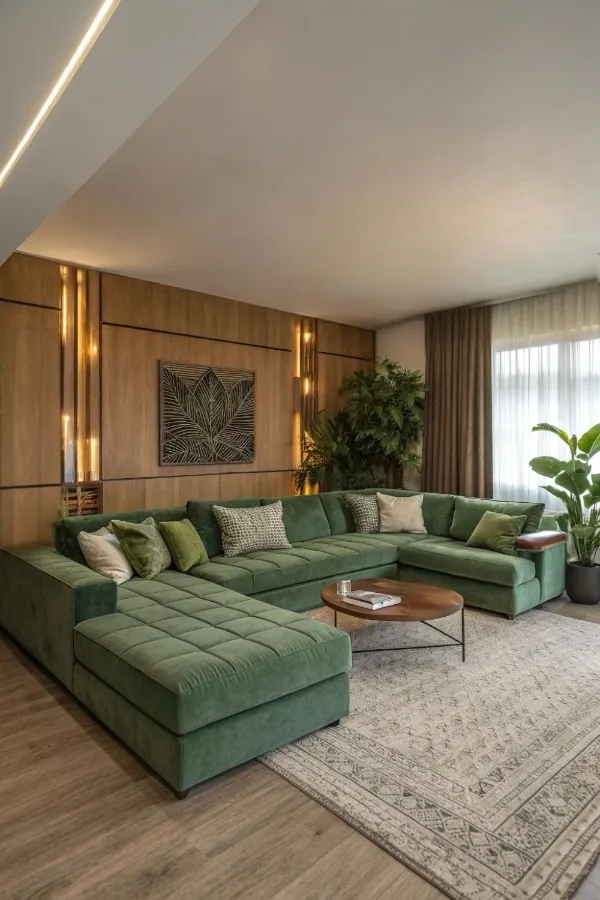
Shop the Look: Add the perfect organic touch and warmth to your biophilic living room with this handwoven jute rug.
5. Embrace a nature-inspired color palette.
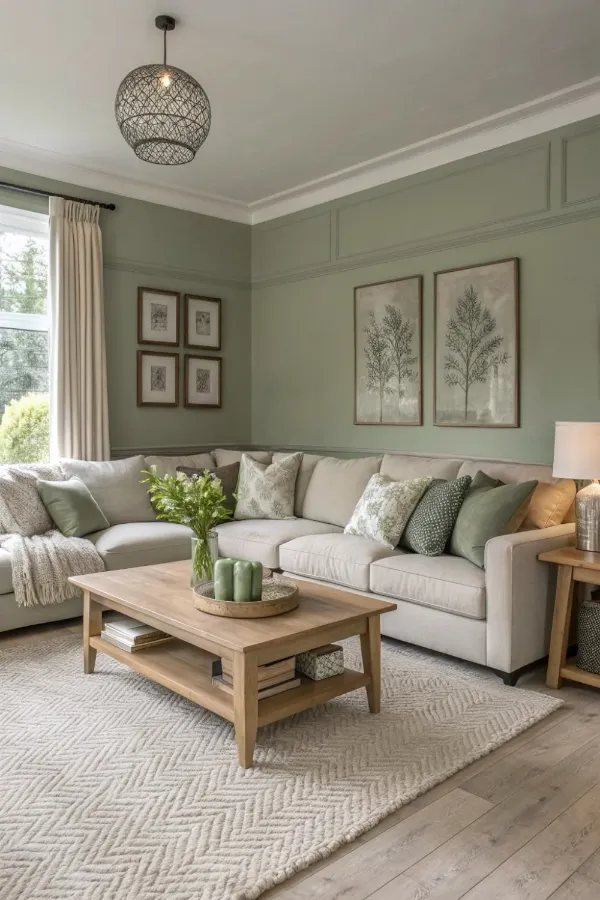
Color profoundly impacts our psychological well-being. To create a biophilic living room, avoid stark, clinical whites and overly bright, stimulating colors. Draw inspiration from the earth’s natural landscape by using soft, muted tones.
- Sage green: Mimics foliage and promotes a sense of renewal.
- Soft beige and sand: They provide a grounding, earthy foundation.
- Sky blue: Creates a feeling of openness and tranquility.
- Off-white: Softens the room and maximizes natural light reflection.
You can visually “lower the temperature” of a room and create a serene atmosphere that invites relaxation by painting a focal wall or simply adding cushions and decorative pieces in calming tones.
Final Thoughts
You don’t need a total renovation to transform your living room into a biophilic sanctuary. Simply introducing more light, organic shapes, and natural colors can create a space that rejuvenates your soul. Creating a healthy home environment is the first step toward a healthier, more balanced life.